
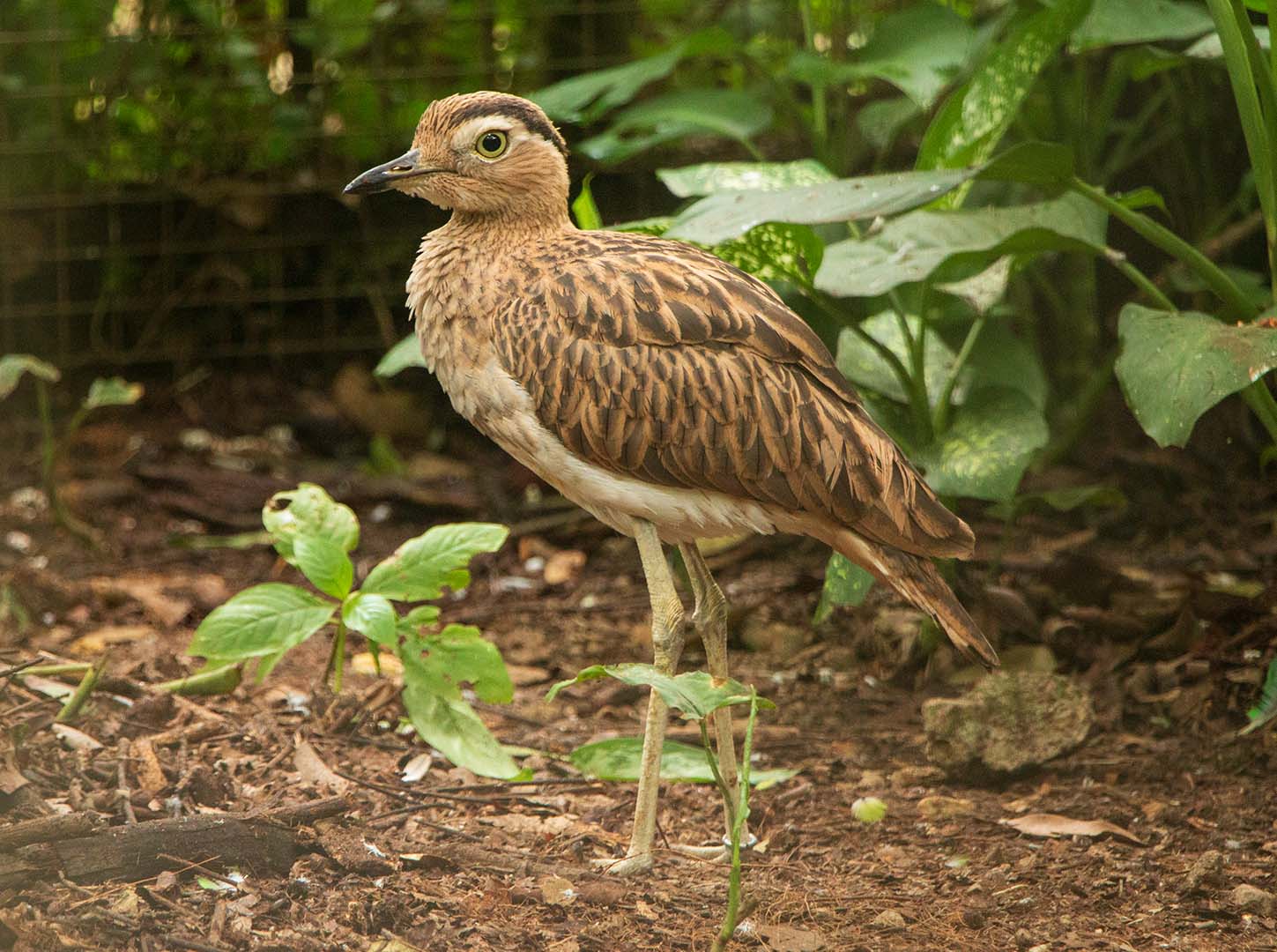
Burhinus bistriatus
Taxonomy
- Scientific name:Burhinus bistriatus
- Family:Burhinidae
- Genus:Burhinus
- Species:Bistriatus
- Common names:Double-striped Thick-knee
Biology
- Morphology:The double-striped thick-knee measures 45 to 50 cm. The head is voluminous, with large eyes that are yellow as their legs, the beak is yellowish with a black tip. The legs are long, the feet are small, and the bill is short and thick. The face, neck and chest are grayish-brown in color, the throat and abdomen are whitish, while the tail is brown.
- Reproduction:This species is monogamous, where the male performs the entire incubation. The nest is made in an area scraped on the ground. It is common to put 2 eggs and the incubation period is at least 27 days. Reproduction has been recorded from February to March.
- Diet:The double-striped thick-knee eats large insects and other small vertebrate and invertebrate prey.
Ecology
- Range:A resident breeder in Central and South America from southern Mexico to Colombia, Venezuela and northern Brazil.
- Habitat:They are a species that usually use open environments such as savannas and pastures.
Threats
- There are few factors that negatively affect the species. IUCN Red List: Least concern.